Open cooling towers are a common cooling equipment. Its advantages are mainly reflected in cooling efficiency and cost, while its disadvantages are concentrated in water quality maintenance and environmental impact, as follows:
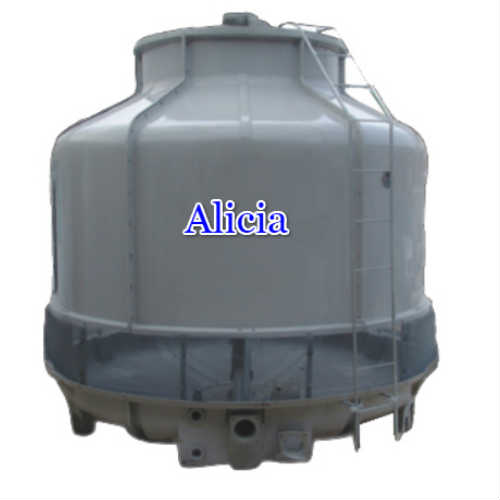
What are the advantages of open cooling towers?
High cooling efficiency: Open cooling towers dissipate heat through water evaporation, which can reduce the water temperature to close to the wet bulb temperature, and the cooling effect is significant. In high temperature seasons or high-load operation, it can quickly and effectively take away a large amount of heat, meeting the requirements for cooling speed and cooling effect in industrial production.
Simple structure: Its structure is relatively simple, mainly composed of tower body, fan, filler, water spraying device, water collection tank and other components. There are no complex closed circulation systems and heat exchangers and other equipment. The overall structure is relatively intuitive, easy to install, operate and maintain.
Low cost: Due to its simple structure, the manufacturing and procurement costs of the equipment are relatively low. At the same time, the operating cost of open cooling towers is not high. Its cooling process mainly relies on the natural evaporation of water and the convection of air. It does not require additional heat exchange media and complex circulation systems, and the energy consumption is relatively low.
Strong applicability: It has strong adaptability to different cooling needs, and can flexibly adjust the scale and number of cooling towers according to actual needs. Whether it is a small industrial enterprise or a large chemical, electric power and other industries, you can choose a suitable open cooling tower according to your own production scale and cooling requirements.
What are the disadvantages of open cooling towers?
Water quality is easily polluted: The water in the open cooling tower is in direct contact with the outside air, and dust, impurities, microorganisms, etc. in the air can easily enter the water, causing water quality to deteriorate. Impurities and microorganisms in the water will form dirt and biofilm on the pipes and equipment surfaces of the cooling system, affecting the heat exchange efficiency, increasing the operating resistance of the equipment, and may even block the pipes and reduce the service life of the equipment.
Large water loss: During operation, the evaporation of water will cause a large amount of water loss, and fresh water needs to be continuously replenished. At the same time, the wind will also take away some water droplets, further increasing the loss of water. For areas with scarce water resources, this may increase the water cost and water resource management pressure of enterprises.
Easy to breed microorganisms: The environment of the open cooling tower is suitable for the growth of microorganisms, such as bacteria and algae. These microorganisms not only affect the water quality, but also may produce odors and have adverse effects on the surrounding environment. In addition, some microorganisms may also cause harm to human health, such as Legionella, and there are certain health and safety risks.
It has a certain impact on the environment: the hot and humid air discharged from the cooling tower may form water mist or condensation in the surrounding environment, affecting the surrounding landscape and environmental humidity. In cold areas, the ground around the cooling tower may also freeze in winter, posing a threat to the safety of personnel and equipment. At the same time, the noise generated by the fan during operation may also cause noise pollution to the surrounding environment.




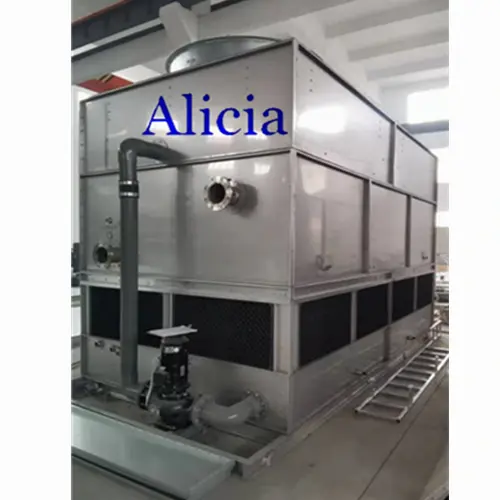 Why are closed-circuit cooling towers needed to make cheese?
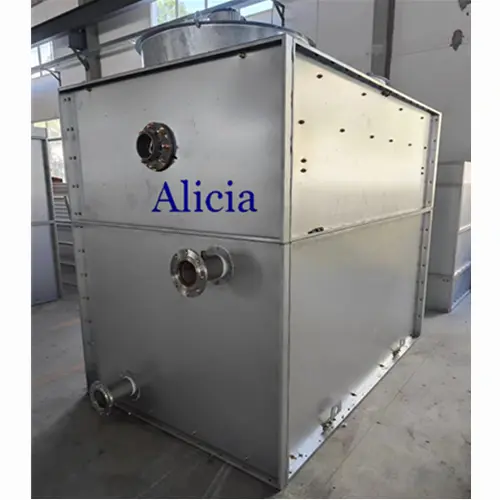 closed-circuit cooling tower systems for process cooling applications
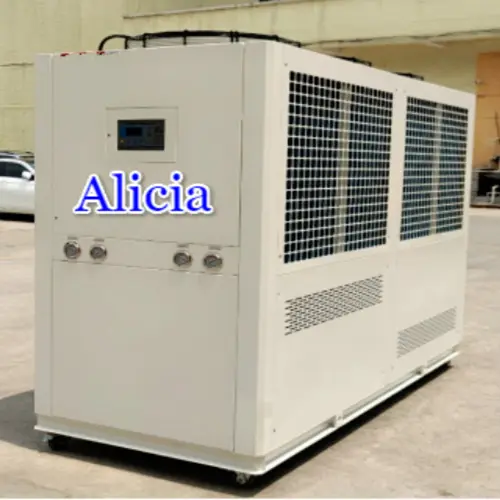 How are chillers used in the cosmetics manufacturing industry?
 How are water chillers used in the detergent manufacturing industry?


