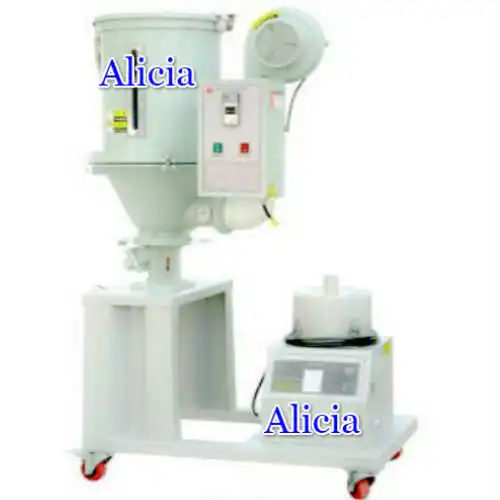
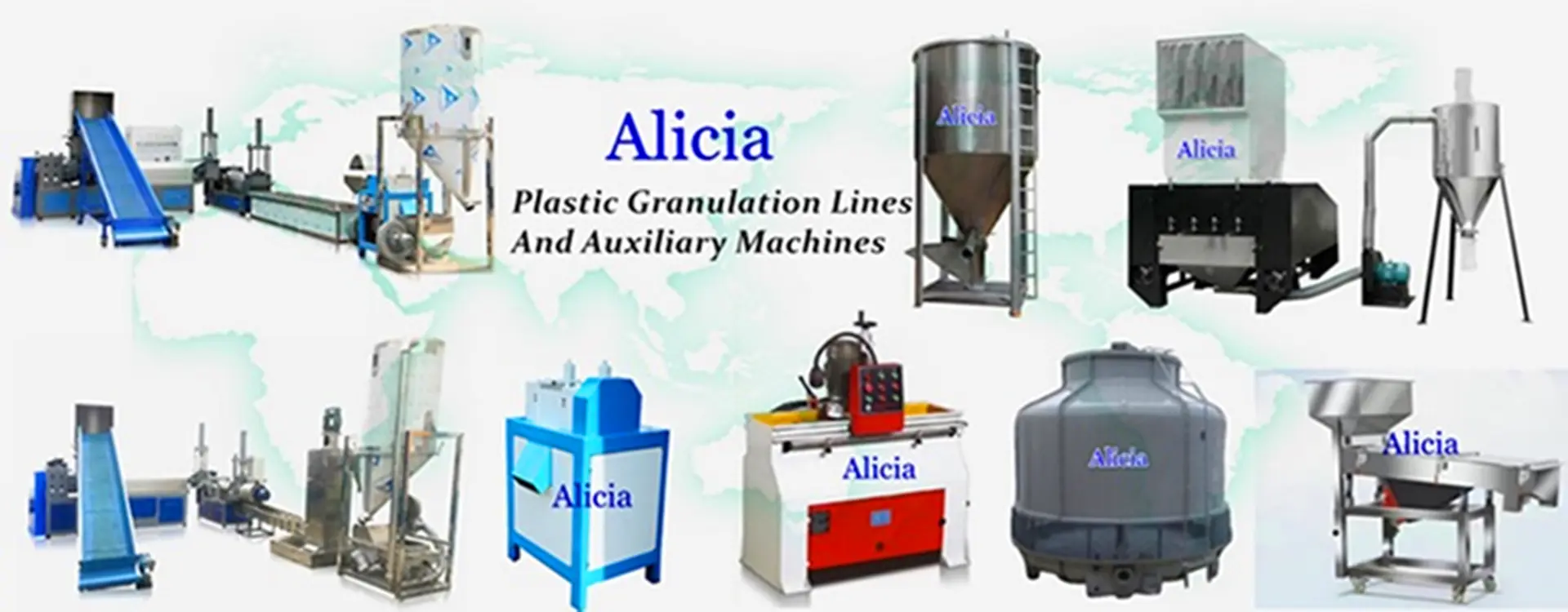
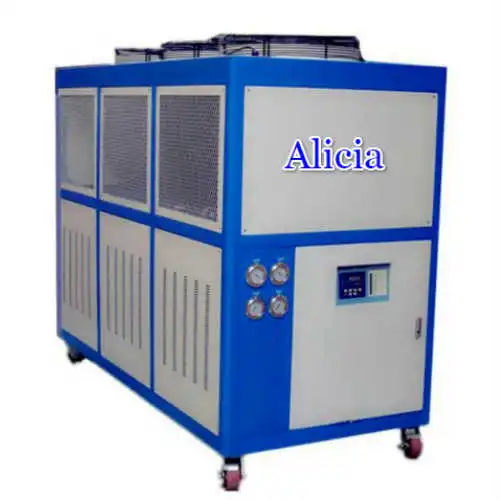
The plastic shoemaking industry needs to use a variety of plastic auxiliary equipment: plastic crushers machines, plastic mixer machines, hopper dryers, water chillers, cooling towers, Plastic granulator machines, Injection molding machine,Extruder, shoe Mold, Thermoforming machine, Plastic welding machine, and so on.The following are some common equipment and their specific functions:
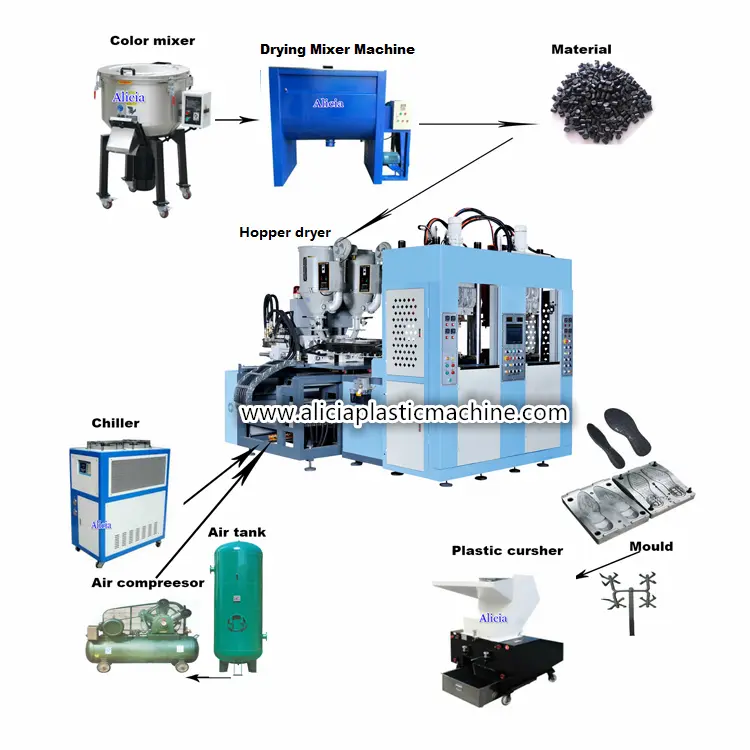 Plastic crusher machines
Plastic crusher machines are used to crush various waste plastic shoes, plastic scraps, etc. into smaller particles or flakes for recycling. By crushing, the volume of plastic can be reduced, which is convenient for subsequent transportation, storage and processing, and the recycling rate of plastic can be improved, and production costs can be reduced.
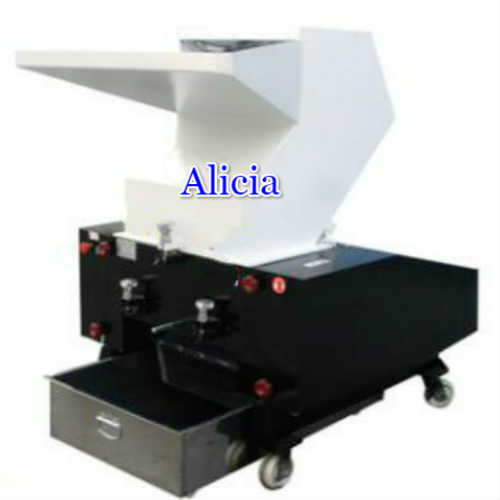 Plastic mixer machines
Plastic mixer: Its function is to evenly mix different types of plastic raw materials and additives (such as plasticizers, stabilizers, pigments, etc.). Ensure that the various raw materials are fully contacted and evenly distributed during the mixing process, so as to ensure the stable and consistent performance of the final product. For example, when producing colored plastic shoes, the pigment is fully mixed with the plastic raw materials through a mixer, which can make the shoes uniform and bright in color.
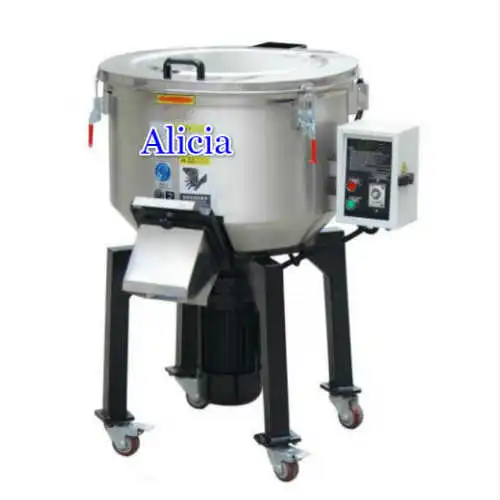 Plastic dryer machines
Plastic dryer: Plastic raw materials are easy to absorb moisture during storage and transportation. The presence of moisture will affect the processing performance and product quality of plastics, such as causing bubbles and surface defects in products. The function of the dryer is to remove moisture from the plastic raw materials and dry them to a suitable moisture content to ensure that the plastic can be smoothly formed during the processing process and improve the quality and performance of the product.
 Plastic granulator machines
Plastic granulator: Process the plastic raw materials that have been pre-treated by crushing, mixing, drying, etc. into plastic particles with certain shapes and specifications. The plastic particles after granulation have better fluidity and uniformity, which is convenient for subsequent molding processes such as injection molding and extrusion. At the same time, the granulation process can also further modify and optimize the plastic, such as adding special additives to improve the performance of the plastic.
Injection molding machine: It is a key molding equipment in plastic shoemaking. After heating and melting the plastic particles, it injects them into the shoe mold at a certain pressure and speed. After cooling and shaping, it forms shoe parts such as soles and uppers of various shapes. The injection molding machine can accurately control parameters such as injection volume, injection pressure, injection speed, mold temperature, etc., so as to ensure the dimensional accuracy and quality stability of the product.
Extruder: It is mainly used to produce some continuous-shaped plastic shoe materials, such as plastic strips for shoes, shoelaces, and edge decorative strips of soles. Through the extruder, the plastic raw materials are continuously extruded and formed under the promotion of heating and screw, which has the advantages of high production efficiency and stable product size.
Mold: Although the mold is not a plastic auxiliary equipment in the strict sense, it is an indispensable part of plastic shoemaking. The mold is made according to the design shape and size of the shoe and is used to form plastic shoe parts. Its precision and quality directly affect the appearance and dimensional accuracy of the product. Different types of shoes require different molds, such as injection molds for injection molding and extrusion molds for extrusion molding.
Thermoforming machine: For some plastic shoe parts that require thermoforming technology, such as thermoplastic plastic decorative sheets and heels on the upper, the thermoforming machine will heat the plastic sheet to a softened state through mold stamping, stretching, etc., so that it is formed into the desired shape. Thermoforming machines can quickly and efficiently produce plastic parts of various complex shapes, and can ensure the appearance quality and dimensional accuracy of the product.
Plastic welding machine: It is used to connect different plastic shoe parts together by welding, such as welding the sole to the upper, or welding some plastic decorative parts to the shoe. Common plastic welding methods include ultrasonic welding, hot plate welding, etc. Plastic welding machines can achieve strong and beautiful connections, improving the overall quality and durability of shoes.
Quality inspection equipment: including various measuring tools (such as calipers, micrometers, etc.) for measuring the dimensional accuracy of shoe parts, hardness testers for testing the hardness of plastics, tensile testing machines for testing the tensile strength, tear strength and other mechanical properties of plastics, and appearance inspection equipment (such as optical projectors, microscopes, etc.) for checking the surface quality and defects of products. Through quality inspection equipment, problems that occur in the production process of products can be discovered in a timely manner to ensure that product quality meets standard requirements.




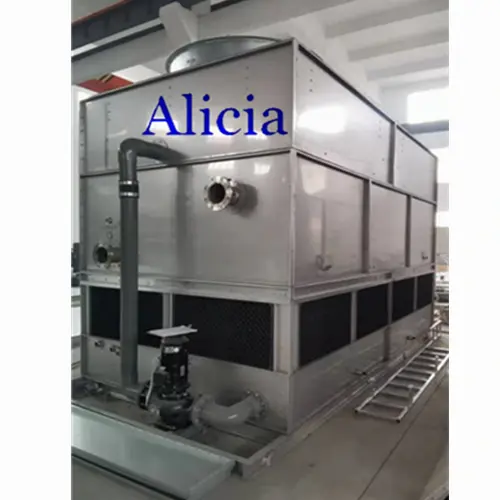 Why are closed-circuit cooling towers needed to make cheese?
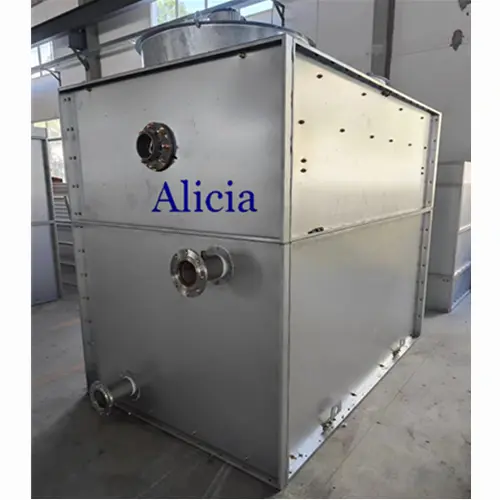 closed-circuit cooling tower systems for process cooling applications
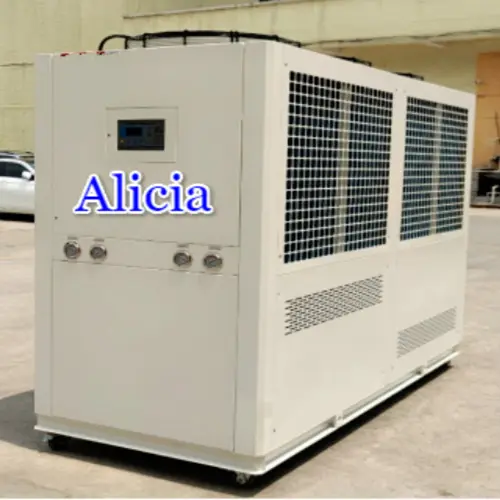 How are chillers used in the cosmetics manufacturing industry?
 How are water chillers used in the detergent manufacturing industry?


