


Hopper Dryer Buyer's Vetting & Total Cost Hub
Two hopper dryers can leave the factory with near-identical nameplates and still sit on very different electricity bills three years later, because the difference lives in control logic, heat recovery and how the air loop is built rather than in headline capacity. Whether you are vetting a saving energy hopper dryer supplier shortlist or testing a plastic hopper dryer supplier against the machine already on your floor, the same nine checkpoints, one total-cost-of-ownership worksheet and a six-line RFQ product format do the work. Everything on this page is anchored to one reference model you can compare every quote against — the AT-HD50ES 50KG/77L energy-saving hopper dryer.
- 50KG / 77L AT-HD50ES hopper capacity
- 30%–50% Energy saving vs traditional non-circulating dryers
- Siemens contactor With PLC control and a temperature sensor

Supplier scorecard
Nine Checkpoints That Separate Two Similar Quotes
Grade every supplier on the same nine lines and score each one Weak, Acceptable or Strong. Anything that lands Weak in rows 01–06 will show up in your energy bill long before it shows up on a purchase order.
Control architecture
On/off thermostat with no feedback from the material.
Digital temperature controller holding a set point.
PLC with a temperature sensor that stops heating or lowers temperature once the set moisture content is reached.
Switching components
Unbranded contactor, no part number on the quote.
Component brands named only on the drawing.
A named international brand — the AT-HD50ES build uses a Siemens contactor.
Heat recovery
Exhaust air discharged straight to atmosphere.
Partial return of warm air to the hopper.
Built-in heat exchanger that preheats incoming fresh air from exhaust waste heat.
Air volume control
Fixed-speed fan running flat out all shift.
Manual damper adjusted by the operator.
Variable frequency fan that raises air volume for wet material and reduces it as moisture falls.
Hopper insulation
Bare sheet-metal wall, heat lost to the room.
Single skin with an air gap.
Thermal insulation layers fitted on the hopper wall.
Heating layout
One heater element at a single level.
Two simple heating zones.
Layered heating structure aimed at the middle and lower part of the hopper, where material is concentrated.
Material documentation
“Works with all plastics” and nothing more.
A general list of resin families.
Named hygroscopic engineering resins — PA, PC, PBT, PET — with the drying assumption written down.
Technical file
Photos only.
Datasheet with a specification table.
Datasheet plus a drawing, a spare-part list and a summary of the control sequence.
Spare parts & warranty
Verbal assurances with no document.
Written warranty covering the machine as a whole.
Written warranty naming the heater, blower and controller, plus a stated spare-part lead time and a named contact.
Reference model
AT-HD50ES 50KG/77L: The Baseline to Quote Against
Pin one machine down as a fixed comparison point, then ask every other supplier to answer the same lines. The AT-HD50ES is an integrated hopper and dryer built for hygroscopic engineering plastics, with the air loop closed rather than blown straight out of the plant.

| Model | AT-HD50ES |
|---|---|
| Capacity | 50KG / 77L |
| Contactor | Siemens |
| Control | Temperature sensor with PLC control system |
| Fan | Variable frequency fan, air volume set by the moisture content of the plastic |
| Dehumidification | Optional stage inside the hot air circulation loop |
| Heating structure | Layered heating aimed at the middle and lower part of the hopper |
| Insulation | Thermal insulation layers on the hopper wall |
| Heat recovery | Built-in heat exchanger preheating incoming fresh air |
| Structure | Compact integrated hopper and dryer |
| Energy saving | 30%–50% compared with traditional non-circulating dryers |
| Suitable materials | PA, PC, PBT, PET and similar hygroscopic engineering plastics |
Inside the build
The component lines are the ones buyers can actually verify before ordering. Ask for the switching brand, the control type and the heater construction on paper, and compare the answers against these three parts of the AT-HD50ES build.
Cost method
Turning the 30%–50% Energy Claim Into Payback
A percentage on a page is not a payback figure. Build the same four cost lines for every quote, in your own numbers, and the cheaper machine stops looking cheaper once the energy line is filled in.
| Cost line | How to build the number | What changes it on the AT-HD50ES |
|---|---|---|
| Capital cost | Machine price plus freight, duty and installation. Ask for each line separately so options cannot hide inside one figure. | An integrated hopper and dryer means no separate drying hopper, stand or long conveying run to buy and install. |
| Energy over 3 years | Heater rating in kW × loaded hours per year × your kWh rate × 3. Use your real shift pattern, not a single-shift assumption. | A stated saving of 30%–50% against traditional non-circulating dryers, from the closed hot air loop, the built-in heat exchanger, the variable frequency fan, PLC control, hopper insulation and layered heating. |
| Maintenance | Filter cleaning, heater and fan wear parts, and annual inspection labour across the same period. | Exhaust air is filtered and reheated inside the loop instead of discharged, and insulation keeps the heater duty cycle lower through the shift. |
| Unplanned downtime | Lost output per hour × hours off-line, plus any air-freight premium for a rush part. | Ask for a named spare-part list and a stated lead time before signing. This is a supplier score, not a machine score. |
Where the saving actually comes from
- Fresh air is drawn into the system and preheated by the built-in heat exchanger.
- The heater raises the air to drying temperature inside a layered heating structure.
- Hot air is directed to the middle and lower part of the hopper, where material is concentrated, instead of heating empty upper space.
- Air that has picked up moisture from the plastic is filtered, where the optional dehumidification stage is fitted, dried.
- The returning air is reheated and sent back to the hopper, with the variable frequency fan setting air volume from the moisture content of the load.

Fill it with your plant data
Replace [kWh rate], [loaded hours per year] and [cost per hour off-line] with your own figures before you compare quotes. If the 3-year energy line is the largest gap between two suppliers, the lower purchase price is usually not the lower running cost — check whether the energy difference is bigger than the price gap before you decide.
Scenario to specification
Match the Dryer to Your Line Before You Compare Prices
Four common line situations, each with the specification they actually require and the decision a buyer has to make before ordering.
Hygroscopic engineering resin
Line looks like: PA, PC, PBT or PET running on a moulding or extrusion line, with material that absorbs moisture in storage.
Specification to ask for: a dryer listed for those resin families, with the dehumidification option available inside the hot air circulation loop.
Buyer decision: get the resin list and the dehumidification option in writing on the quote. “Dries all plastics” is not a specification.
High ambient humidity
Line looks like: a plant in a humid climate, or a wet season with raw material arriving damp from packaging and delivery.
Specification to ask for: a variable frequency fan that raises air volume when the load is wet, plus the built-in heat exchanger that preheats incoming fresh air.
Buyer decision: ask what happens to air volume as moisture falls. A fixed-speed fan keeps spending energy after the material is already dry.
Continuous shifts, machine-side mounting
Line looks like: three-shift production with the dryer next to the machine and limited floor space to work with.
Specification to ask for: the integrated hopper and dryer in one compact body, with thermal insulation layers on the hopper wall.
Buyer decision: measure the footprint and working height of the machine-side position first, and check the hopper also covers your storage need for the shift.
Over-drying risk on sensitive grades
Line looks like: material that is easy to over-dry, or a busy line where nobody can watch the dryer through the shift.
Specification to ask for: PLC control with a temperature sensor that automatically stops heating or lowers temperature once the set moisture content is reached.
Buyer decision: ask the supplier to describe the control sequence in writing. This is the checkpoint that separates a PLC quote from a thermostat quote.
Request for quote
The Six-Line RFQ That Gets an Accurate Quote
Incomplete enquiries are the main reason a first quote comes back generic. Send these six inputs together and a supplier can size the hopper, heater and fan, and confirm the options that matter, on the first pass.
Send it once, compare cleanly
Use the same six lines for every supplier you approach, including us. The replies then differ on specification and price rather than on how the question was worded, and you can drop each answer straight into the nine-point scorecard and the TCO worksheet.
The same sheet works for a single unit and for a multi-unit line project — list every machine position you need to cover and the volumes add up on one enquiry.
Related Products
Keep adjacent product options together for a faster catalog comparison.

Plastic Pet PP Film Sheet Roll Crushing Machine
The crusher can crush all kinds of soft or hard flakes or film runners within thickness 0.02-5mm ( such as PVC,PET,PE,PP,etc).
View product
air cooled/cooling chiller, water chillers,CNC Cooling Chillers
Featuring advanced microcomputer controls, our industrial water chiller provides stable thermal management. Trust a leading cnc cooling chiller supplier today.
View product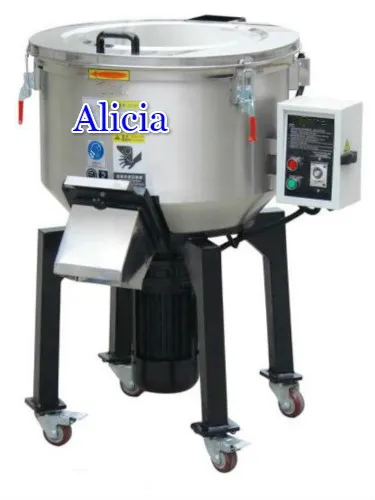
Plastic Color Resin Pellets Granules Mixer
Alicia plastic color resin pellets mixer machines mix granules, powder, and masterbatch evenly for molding plants and plastic processing lines.
View productFrequently Asked Questions
how do i compare two hopper dryer suppliers when the nameplates look identical?
grade both quotes on the same nine checkpoints: control architecture, switching components, heat recovery, air-volume control, hopper insulation, heating layout, material documentation, technical file, and spare-part or warranty clarity. a plc with a temperature sensor, a variable frequency fan and a built-in heat exchanger are the lines that usually separate a low-cost quote from a low running cost.
what do the siemens contactor and plc control actually do?
the plc reads a temperature sensor and automatically stops heating or lowers temperature once the material reaches the set moisture content, which prevents over-drying. the siemens contactor is the switching component named in the at-hd50es build, and naming component brands on a quote is one of the fastest ways to compare two suppliers.
is the 30%–50% energy saving realistic for my line?
the figure is stated for the at-hd50es against traditional non-circulating dryers and comes from the air loop: exhaust air is filtered, optionally dehumidified and reheated instead of being discharged. your real saving depends on resin, throughput, shift hours and your electricity rate, so put your own numbers into the tco worksheet before you rely on it.
which materials can the at-hd50es dry?
it is designed for drying plastic material and is listed as suitable for hygroscopic engineering plastics such as pa, pc, pbt and pet. it also covers raw materials that arrived damp from packaging and delivery.
what information do i need to send for an accurate quote?
send six inputs: resin type, throughput in kg per hour, target moisture, shift pattern, ambient temperature and humidity, and line layout. with those on one sheet a supplier can size the hopper, heater and fan on the first pass instead of guessing.
does the at-hd50es need a dehumidifier?
no. dehumidification is an optional stage inside the hot air circulation loop. add it when the resin, the ambient humidity or the target moisture makes it necessary, and confirm the option in writing before ordering.


