What are the differences between single-shaft shredders and double-shaft shredders?
Single-shaft shredder and double-shaft shredder are common types of shredders. Many people who are new to them are always confused when choosing a shredder. Single-shaft and double-shaft shredders are roughly divided into four types. The following is a detailed explanation of the difference between the two.
1. Different composition and structure
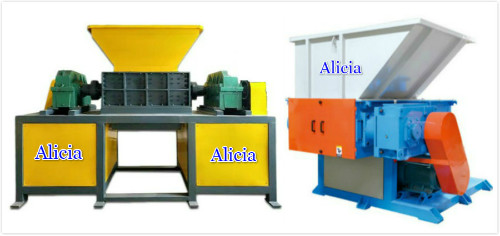
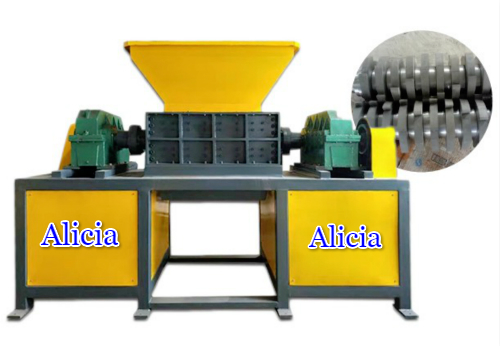
The double-shaft shredder is mainly composed of a shredding blade set, a load-bearing box, a box bracket, a feeding system, a power system, and an electrical control system. The material is broken using the principle of mutual shearing and tearing of two relatively rotating knife rollers. The material enters the shredding box, and is shredded into small pieces through the comprehensive action of tearing, squeezing, and shearing by the shredding blade, and is discharged through the discharge hole under the equipment. Subsequent materials are sent out through the conveyor belt for further crushing. deal with.
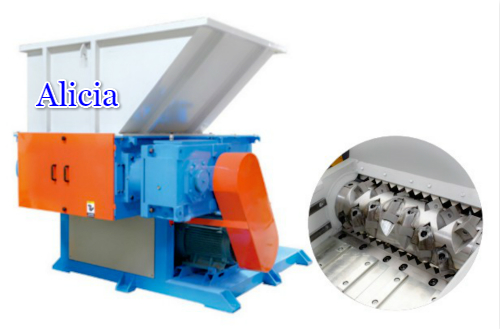
The single-shaft shredder is mainly composed of a spindle, a blade, a fixed knife, a load-bearing box, a box bracket, a feeding system, a pushing system, a power system, and an electrical control system. The material enters the shredding box through the feeding system. The box carries the shredding blade. The push box pushes the material to the vicinity of the blade. The material is torn into small pieces by the comprehensive action of tearing and squeezing by the shredding blade. The material is discharged from the screen holes to achieve shredding of the material.
2. Different knife types
The double-shaft shredder has two moving shafts, both of which are equipped with blades. The two shafts rotate relative to each other and operate the material similar to that of a single-shaft shredder.
The single-shaft shredder is equipped with only one moving shaft, and the blades are installed on this shaft, forming a shearing pattern with the fixed knife on the box.
3. Different working principles
The dual-shaft shredder is driven by "dual motors + dual planetary reducers" and uses the principle of mutual shearing and tearing between two relatively rotating knives to crush materials.
The single-shaft shredder adopts a single-shaft "motor + reducer" drive design to provide large shearing force and ensure high crushing efficiency. It is often used for fine crushing of solid waste, which can process materials into smaller particle sizes at one time.
4. Differences in broken materials
The double-shaft shredder is driven by a reducer, with low speed and high torque, high crushing efficiency and greater applicability. Suitable for shredding domestic waste, industrial waste, electronic waste, biomass, kitchen waste, medical waste, wood and other large and hard materials.
The materials shredded by single-shaft shredders are limited compared with double-shaft shredders. They are often used in paper mills, waste fabrics, leather scraps, PE, PP plastic pipes, plastic films, woven bags, wires and cables, cans, and aluminum chips. and other aluminum products. However, since the single-shaft shredder uses a fixed knife and a moving knife to work together, the equipment torque is limited, and the size of the feed bin is limited, so the granules shredded by the single-shaft shredder are smaller than those of the double-shaft shredder.
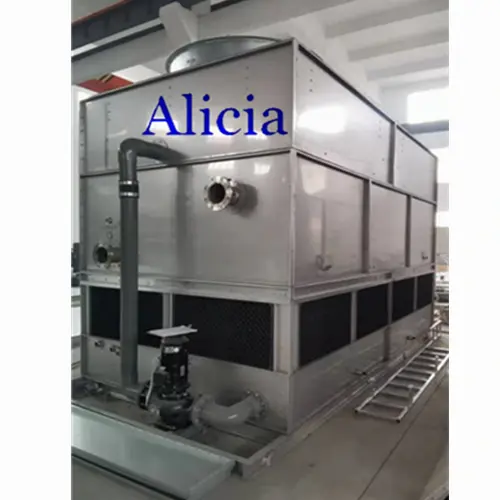
Cheese factories use closed-circuit cooling towers primarily for hygiene and safety, precise temperature control, and stable operation. Open-circuit towers cannot meet the food-grade sterility and temperature control requirements.
Industrial closed‑circuit cooling tower systems are ideal for applications requiring fluid purity, precise temperature control, and reduced water/chemical usage—especially in chemical, food, pharmaceutical, manufacturing, and data center industries.
The core functions of chillers in the cosmetics industry are precise temperature control, rapid cooling, and constant temperature preservation, covering four major stages: emulsification/reaction, extraction, filling, and equipment cooling. These directly determine product activity, stability, and production efficiency.
The core functions of chillers in detergent production are precise temperature control, ensuring reaction stability, cooling materials, protecting equipment, and stabilizing formulations. They cover the entire process from synthesis, ingredient mixing, homogenization to filling/molding, directly determining product stability and yield.

 Why are closed-circuit cooling towers needed to make cheese?
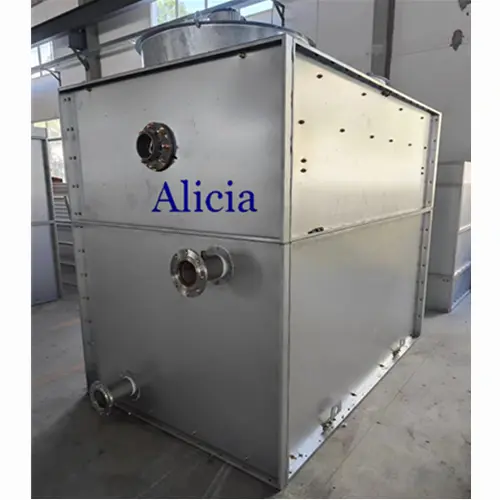 closed-circuit cooling tower systems for process cooling applications
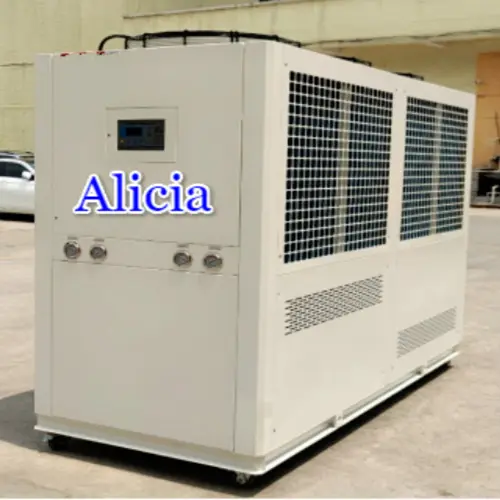 How are chillers used in the cosmetics manufacturing industry?
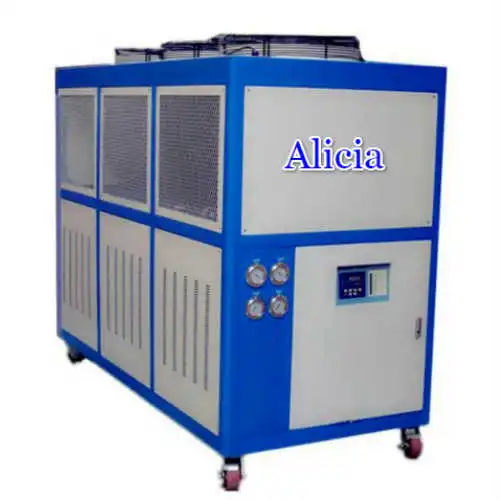 How are water chillers used in the detergent manufacturing industry?



