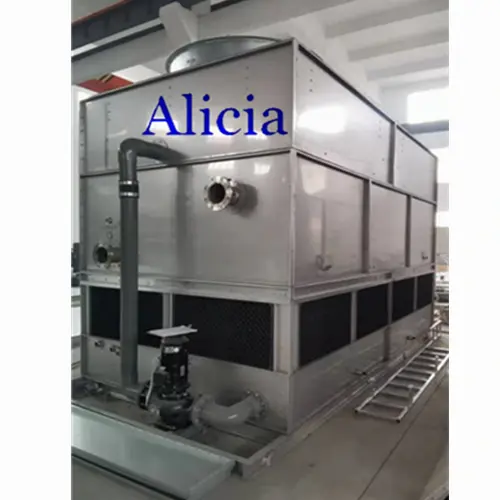
Difference of cross flow square tower & counter flow square tower

Views : 3884
Author : Alicia Import and Export Trade Co., Ltd
Update time : 2024-03-01 17:52:40
What is the difference between cross flow square tower and counter flow square tower?
Product introduction for 
cross flow square tower
In a crossflow tower, air travels horizontally across the direction of the falling water whereas in a counterflow tower air travels in the opposite direction (counter) to the direction of the falling water.
Cross Flow Open Type Square Cooling Tower

Cross Flow Open Type Square Cooling Tower


Product introduction for counter flow square tower
In a counterflow cooling tower, process water is pumped into a sealed header box. The header box then distributes the water into branch arms and nozzles, creating a pressurized water distribution system.
counter flow induced draft square cooling tower price

counter flow induced draft square cooling tower price

Related News
Read More >>
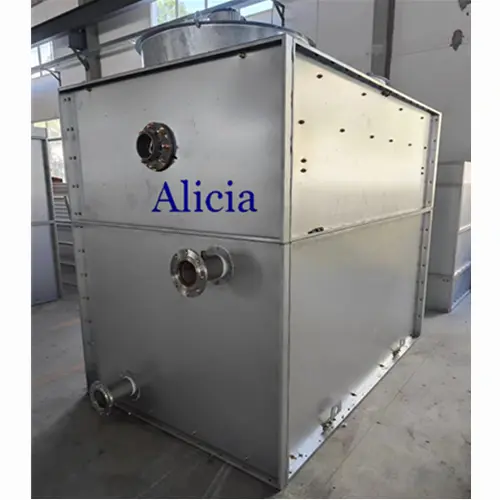
Why are closed-circuit cooling towers needed to make cheese? Why are closed-circuit cooling towers needed to make cheese?
May .29.2026
Cheese factories use closed-circuit cooling towers primarily for hygiene and safety, precise temperature control, and stable operation. Open-circuit towers cannot meet the food-grade sterility and temperature control requirements.
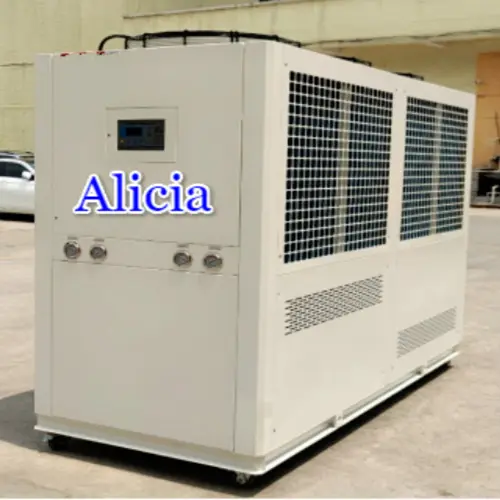
closed-circuit cooling tower systems for process cooling applications closed-circuit cooling tower systems for process cooling applications
May .28.2026
Industrial closed‑circuit cooling tower systems are ideal for applications requiring fluid purity, precise temperature control, and reduced water/chemical usage—especially in chemical, food, pharmaceutical, manufacturing, and data center industries.
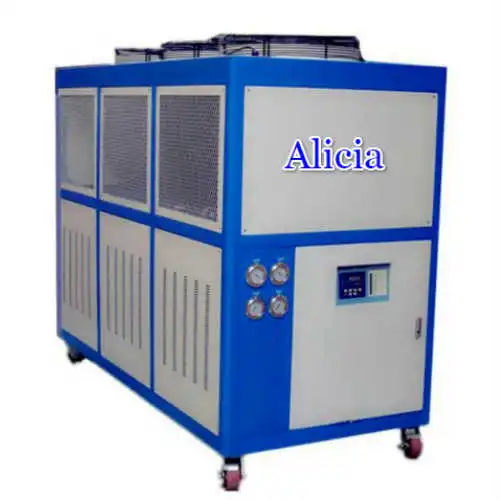
How are chillers used in the cosmetics manufacturing industry? How are chillers used in the cosmetics manufacturing industry?
May .16.2026
The core functions of chillers in the cosmetics industry are precise temperature control, rapid cooling, and constant temperature preservation, covering four major stages: emulsification/reaction, extraction, filling, and equipment cooling. These directly determine product activity, stability, and production efficiency.
How are water chillers used in the detergent manufacturing industry? How are water chillers used in the detergent manufacturing industry?
May .16.2026
The core functions of chillers in detergent production are precise temperature control, ensuring reaction stability, cooling materials, protecting equipment, and stabilizing formulations. They cover the entire process from synthesis, ingredient mixing, homogenization to filling/molding, directly determining product stability and yield.