
What is the role of chillers in plastic production?
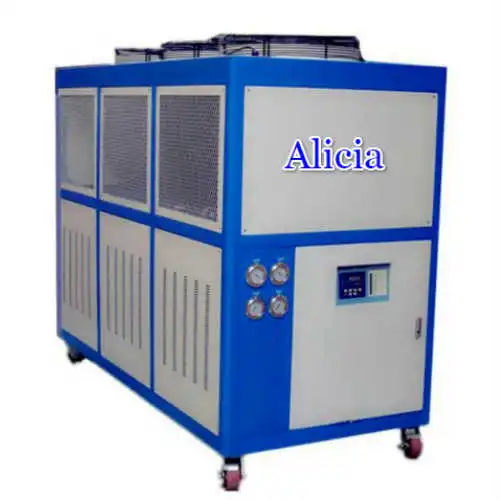
The chiller mainly acts on the molding mold of plastic processing machinery, injects chilled water into the runner inside the mold, cools the mold at a constant temperature through heat exchange, and maintains the temperature at a constant state to meet the needs of the production process. , The mold is equivalent to a heat exchanger. The application of the chiller greatly improves the surface finish of plastic products, reduces the surface traces and internal stress of plastic products, and makes the product easy to demold without deformation, without shrinking, thus greatly improving Improve production efficiency.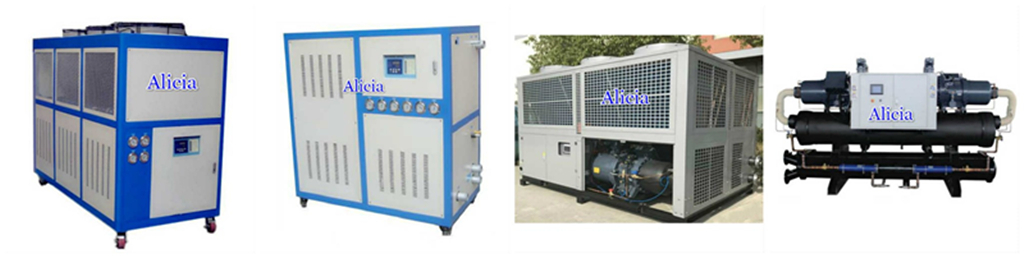
With the continuous expansion of the application fields of plastics, high-yield, precision, and energy-saving plastic processing equipment has become an important direction for market development. In these processes, in addition to traditional mainframe equipment such as extruders and injection machines, the application and development of chillers have become an important part of the plastics processing market.
1. In the injection molding process of plastic products (televisions, computers, washing machines, mobile phones, low-temperature refrigerators, air conditioners, plastic toys, automobile plastic parts, etc.), whether they can be cooled (cooling down) in a timely and effective manner will directly affect the appearance of the product And shape qualification rate, which affects production efficiency, production costs, and corporate profits.
2. The production of plastic containers (bottle blowing) and packaging film is even more inseparable from chillers. If the plastic container cannot be cooled and shaped in time during the production process, the produced container will not be full, uneven in wall thickness, not bright in color, or even unable to be formed, resulting in lower product quality. In the production of packaging film, if there is no cooling and molding of cold water (wind), qualified products cannot be produced. If the cold water provided by the chiller is used for cooling, not only can the product quality be greatly improved, but also the production efficiency can be improved.
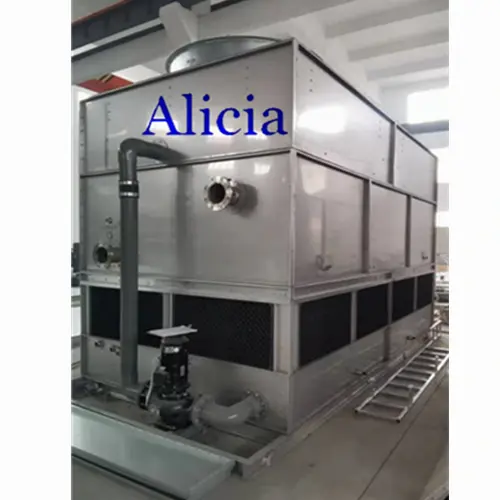 Why are closed-circuit cooling towers needed to make cheese?
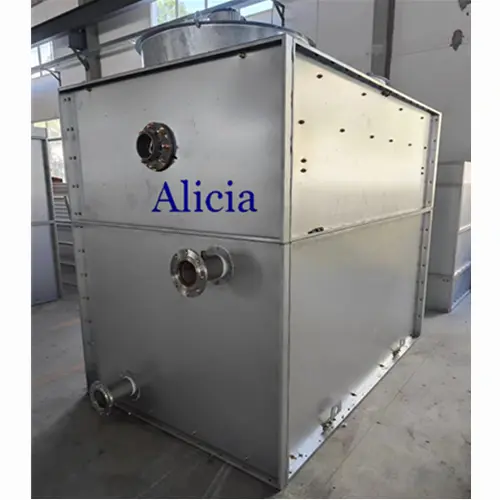 closed-circuit cooling tower systems for process cooling applications
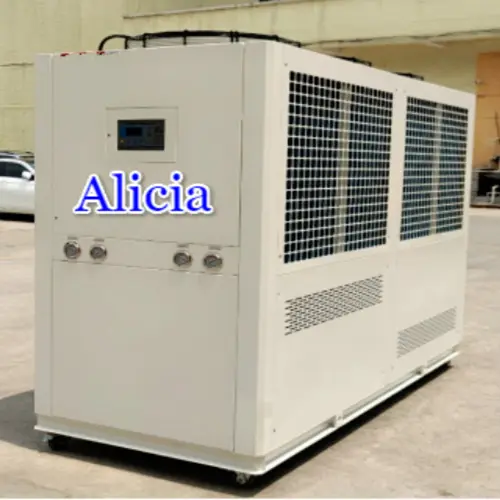 How are chillers used in the cosmetics manufacturing industry?
 How are water chillers used in the detergent manufacturing industry?



