In the carbonation process of CO2-containing beverages, the core role of industrial chillers is to precisely control liquid temperature, creating optimal conditions for efficient and stable dissolution of CO2. Their operation closely coordinates with carbonation equipment (such as carbonation towers and Venturi mixers) and can be divided into the following key steps:

1. "Pre-cooling" before carbonation: Lowering the initial temperature of the base liquid
The core principle of carbonation is that "low temperature and high pressure promote the dissolution of CO2" (Henry's Law: the lower the temperature, the higher the solubility of the gas). Therefore, the base liquid (a mixture of syrup and water) must be cooled to an extremely low temperature (typically 2-5°C, but adjusted based on product requirements) in a chiller before entering the carbonation equipment.
Chiller Operation:
i. The chiller cools circulating water to a set temperature (e.g., 3°C) and pipes it to a plate heat exchanger (or coil heat exchanger).
ii. The base liquid flows through one side of the heat exchanger, exchanging heat with the lower-temperature cold water on the other side, rapidly cooling the temperature to the target value (e.g., 4°C).
iii. The cooled base liquid enters the carbonator, where it is in a "high-solubility" state, ready for subsequent CO2 injection.
II. "Constant Temperature Maintenance" During Carbonation: Stabilizing the Dissolution Environment
When the base liquid enters the carbonator (e.g., a common "carbonating tower"), CO2 gas is forcibly injected into the liquid under high pressure (typically 3-6 bar, depending on the beverage type). During this process, the chiller must continuously provide cooling to the carbonator to prevent temperature increases due to the following factors:
The high-pressure gas may release a small amount of heat as it expands;
The friction between the liquid and gas generates a small amount of heat.
Chiller Operation:
i. The carbonation tower is typically equipped with a cooling jacket. Low-temperature chilled water (e.g., 2-3°C) from the chiller continuously flows through the jacket, removing heat from the equipment through heat conduction.
ii. Some high-end equipment incorporates cooling coils within the tower, allowing the cold water to directly contact the material (or indirectly through the coil walls) for heat exchange, further precisely controlling the liquid temperature.
iii. The chiller's temperature control system (e.g., a PLC and temperature sensor) monitors the liquid temperature within the tower in real time. If it exceeds a set value (e.g., 5°C), it automatically adjusts the chilled water flow rate or compressor power to maintain a stable temperature within a ±0.5°C range, preventing temperature fluctuations that could cause a decrease in carbon dioxide solubility (gas evolution).
III. "Buffering and Cooling" After Carbonation: Preventing Secondary Temperature Rising
Carbonated beverages must be temporarily stored in a buffer tank before entering the bottling process. If the temperature rises during this period, dissolved carbon dioxide will re-precipitate, causing problems such as foaming and inaccurate metering during bottling.
Chiller Operation:
i. The buffer tank is also equipped with a cooling jacket or coil. Low-temperature cold water from the chiller continuously circulates to maintain the beverage temperature within the tank at 4-6°C.
ii. The pipes connecting the buffer tank and the filler are insulated and wrapped in insulation. The chiller also uses a micro-cooling jacket on the outside of the pipe to provide additional cooling, ensuring that the beverage temperature does not rise by more than 1°C during transportation.
iii. Core Logic: Coordinated Control of Temperature and Pressure
In the carbonation process, the chiller's role is not independent; it works in conjunction with the CO2 pressure control system:
Low temperature provides the foundation for high solubility, while high pressure further "pushes" CO2 molecules into the liquid.
If the chiller fails to maintain a low temperature, increasing the pressure will only increase CO2 solubility to a limited extent (and will increase equipment load and cost).
For example, at 2°C and 4 bar pressure, 1 liter of water can dissolve approximately 2.5 grams of carbon dioxide (satisfying the requirements of typical carbonated beverages). If the temperature rises to 10°C, the solubility drops to approximately 1.8 grams at the same pressure. The pressure must be increased to 6 bar to achieve the same dissolution rate, which increases equipment energy consumption and the risk of leakage. Therefore, efficient cooling in a chiller can directly reduce energy consumption and costs in the carbonation process.
Summary
Industrial chillers precisely control the beverage temperature between 2 and 6°C during the carbonation process, providing a key guarantee for the efficient dissolution and stable retention of carbon dioxide. They are critical equipment for the carbonated beverage's bubbly taste and production stability. Their operating accuracy directly impacts product quality (such as bubble volume and taste clarity) and production efficiency (such as material loss and equipment failure rate).




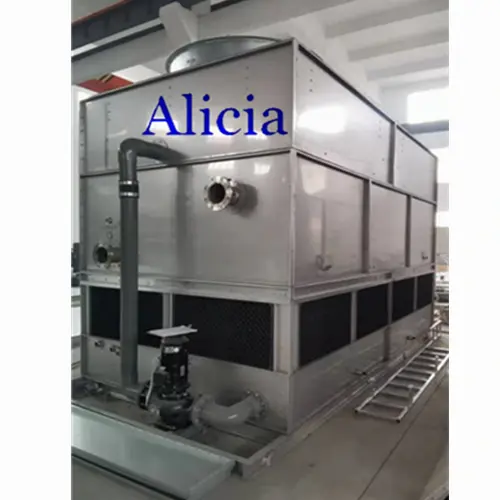 Why are closed-circuit cooling towers needed to make cheese?
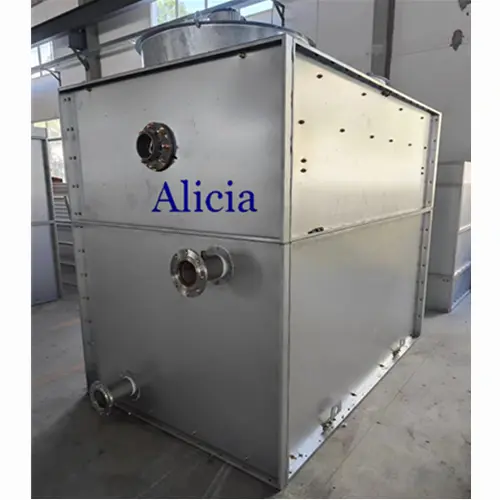 closed-circuit cooling tower systems for process cooling applications
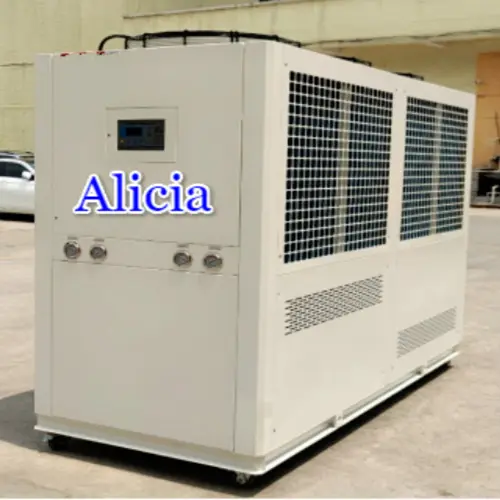 How are chillers used in the cosmetics manufacturing industry?
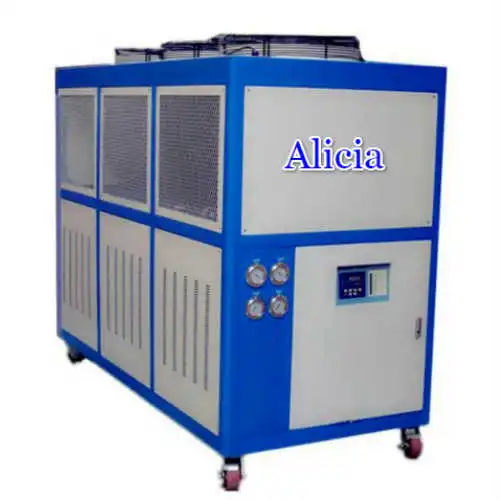 How are water chillers used in the detergent manufacturing industry?


