In the industrial production of soda water, the
chiller (refrigeration unit) is mainly used to control the temperature of key links to ensure the efficiency of chemical reactions, the solubility of carbon dioxide and the stability of products.
The following are its specific application scenarios and principles:
I. The core role of the industrial water chiller in the production of soda waterII. Specific application scenarios and processes

The industrial water chiller provides a constant low-temperature environment for production equipment by circulating low-temperature media (such as chilled water, ethylene glycol solution), and is mainly used in the following links:
II. Specific application scenarios and processes
1. Carbon dioxide dissolution (carbonated water preparation)
Scenario: In a reactor or carbonator, food-grade carbon dioxide is dissolved in water to form carbonated water (H₂O + CO₂ → H₂CO₃).
Temperature requirements:
Low temperature promotes dissolution: The solubility of carbon dioxide in water increases as the temperature decreases (e.g., the solubility is about 3.8g/L at 0℃ and about 1.6g/L at 20℃).
Process control: The water temperature is controlled at 5~10℃ (some processes are as low as 0℃) by a chiller to improve the carbon dioxide absorption efficiency and reduce gas escape.
Equipment connection:
The chilled water pipe of the industrial water chiller is connected to the carbonator jacket or plate heat exchanger to directly cool the water body.
Some processes adopt the "precooling + carbonation" two-step method: first use a industrial water chiller to precool the pure water to a low temperature, and then introduce carbon dioxide.
2. Neutralization reaction temperature control (chemical production)
Scenario: In the reactor, sodium carbonate reacts with carbonated water to generate sodium bicarbonate (Na₂CO₃ + H₂CO₃ → 2NaHCO₃).
Temperature effect:
The reaction is an exothermic reaction. The increase in temperature will cause carbon dioxide to escape, affecting the sodium bicarbonate yield and the pH value of the solution.
The reaction temperature is maintained at 20~30℃ (avoid exceeding 40℃) by a industrial water chiller to ensure reaction balance and product stability.
Equipment connection:
The industrial water chiller provides low-temperature medium for the jacket or coil of the reactor to take away the reaction heat in real time.
3. Cooling before mixing and filling
Scenario: After seasoning and sterilization, the soda water needs to be cooled to a suitable temperature before filling to avoid deformation of the packaging material or gas escape caused by high temperature.
Temperature control:
The temperature of the sterilized solution is usually high (such as about 60℃ after pasteurization), and it needs to be cooled to 10~15℃ through the plate heat exchanger with chilled water provided by the industrial water chiller .
Low-temperature filling can reduce carbon dioxide volatilization, maintain the richness of bubbles, and reduce the risk of microbial reproduction.
Equipment connection:
The industrial water chiller is connected in series with the plate heat exchanger to form a closed-loop cooling system.
4. Equipment and environmental cooling
Scenario:
- Air conditioning system in the production workshop: In the high temperature environment in summer, the industrial water chiller provides a constant temperature for the workshop (such as 25℃±2℃) to ensure stable operation of the equipment and the operating environment of the workers.
- Compressor cooling: When the carbon dioxide cylinder is decompressed or the compressor is working, heat is generated. The gas source needs to be cooled by a industrial water chiller to avoid pressure fluctuations caused by gas volume expansion.
- Indirect effect: Stable ambient temperature can indirectly improve the carbon dioxide dissolution efficiency and process stability.


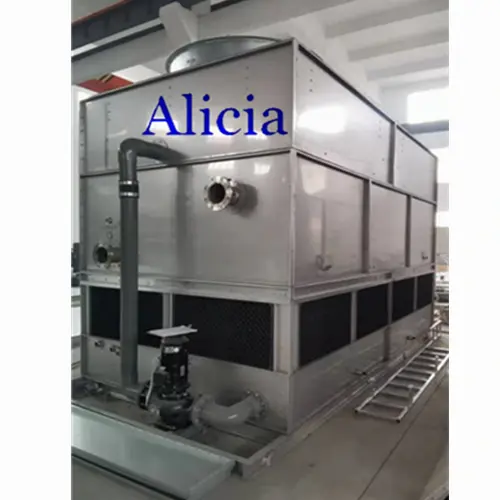 Why are closed-circuit cooling towers needed to make cheese?
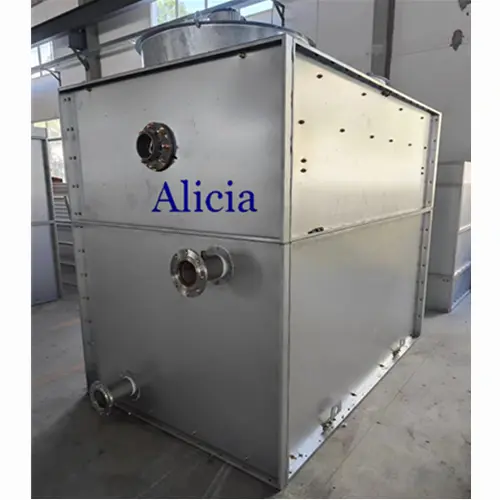 closed-circuit cooling tower systems for process cooling applications
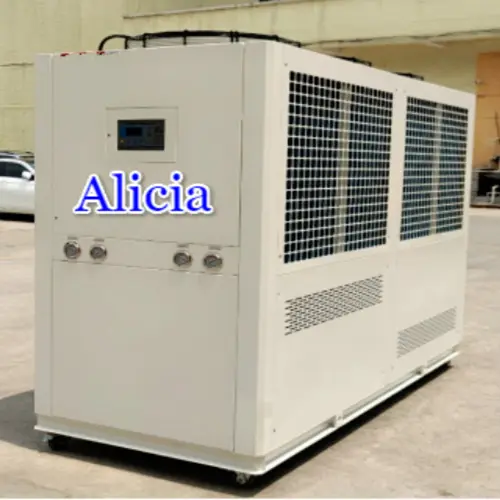 How are chillers used in the cosmetics manufacturing industry?
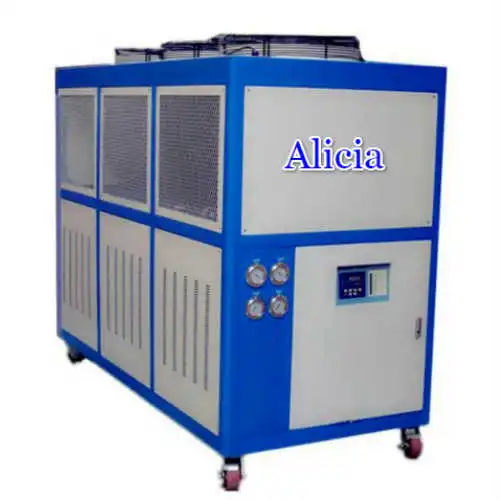 How are water chillers used in the detergent manufacturing industry?


