


PET packaging industry use industrial mold mehumidifiers
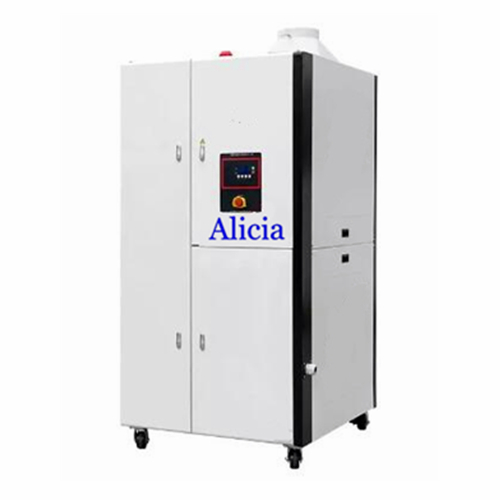
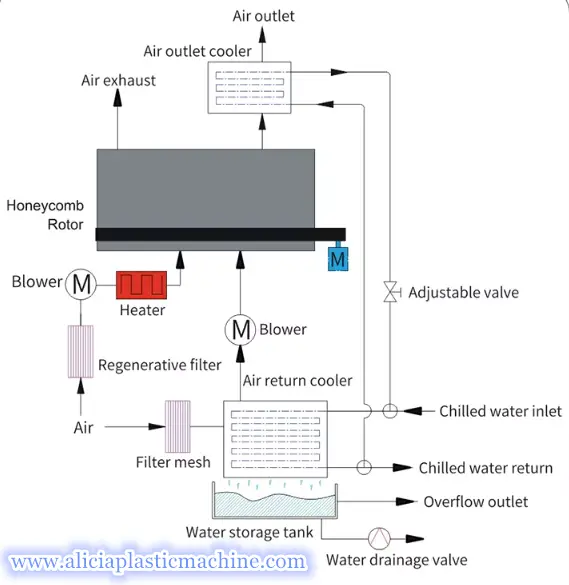
Industrial Mold Dryer is an air dehumidifier used mainly to prevent the formation of condensation on the surface of the molds, due to the use of low temperature cooling. The air dehumidifiers guarantee optimal working conditions to increase production and reduce waste caused by condensation The system is mainly applied in Extrusion blow molding,Injection blow molding,Injection molding.
Mold dehumidifiers applications:
The core value of mold dehumidifiers is to control the humidity around the mold, preventing condensation on the mold surface, ensuring product quality and extending mold life. Therefore, their application is concentrated in industries that rely on molds for mass production and have strict requirements for product precision, appearance, or performance. The following are their main application areas and specific scenarios:
1. Plastics Products Industry (Core Application Area)
Plastic molding is the most widely used application for mold dehumidifiers, particularly for processes prone to condensation in high-humidity environments and requiring high product precision. These include:
Injection molding: For example, the production of PET preforms (the raw material for beverage bottles), automotive plastic parts (such as instrument panels and wiring harness connectors), and electronic plastic housings (such as mobile phone charger housings and printer accessories). If condensation on the mold surface causes water marks and bubbles on these products, it can directly affect the sealing quality and appearance quality. Dehumidifiers can control the dew point around the mold to ≤5°C to prevent condensation.
Extrusion molding: For example, the production of plastic pipes (PPR water pipes, PVC drainage pipes) and plastic sheets (decorative panels and refrigerator liners). Some extrusion molds (such as pipe sizing sleeves) require cooling to set the shape. In high humidity environments, condensation easily forms on the cooling surface, resulting in uneven pipe surfaces. Dehumidifiers can help keep the mold cooling surface dry.
Blow molding: For example, in the production of hollow plastic containers (such as laundry detergent bottles and cosmetic bottles), blow molding molds must cool quickly to set the bottle shape. Condensation can cause a "white fog" or scratches on the bottle body, affecting the product's transparency and aesthetics.
2. Rubber Products Industry
During the rubber molding process (such as vulcanization molding), the mold must maintain a specific temperature (usually 80-200°C). If the workshop humidity is high (such as during the rainy season in southern China or in coastal areas), the temperature difference between the mold surface and the air can easily lead to condensation, which can cause:
The rubber product will stick to the mold, making demolding difficult and damaging the product edges;
Condensation can cause rust on the mold surface, contaminating rubber products (such as seals, tire components, and medical rubber stoppers), affecting product purity and performance. Therefore, mold dehumidifiers can effectively prevent the aforementioned problems in the production of rubber seals, automotive shock absorbers, and medical rubber products. They are particularly suitable for the production of precision rubber parts (such as waterproof rubber rings for electronic devices).
3. Electronics and Semiconductor Industries
The electronics industry has extremely high requirements for product cleanliness, oxidation resistance, and short-circuit protection. Mold dehumidifiers are primarily used in two scenarios:
Electronic component molding: For example, in the production of precision plastic parts such as connectors (USB ports, circuit board sockets), sensor housings, and chip package bases. These products require dimensional accuracy of up to 0.01mm. Condensation on the mold can cause dimensional deviations or surface impurities. Dehumidifiers ensure a dry molding environment and avoid precision defects.
Semiconductor packaging assistance: Some semiconductor packaging processes (such as epoxy molding) require the use of molds to secure the chip. High humidity can cause gaps at the junction of the molding compound and the mold, compromising the seal of the package. Dehumidifiers maintain a low humidity environment around the mold to prevent moisture-induced chip failure after packaging.
4. Medical Device Industry
Medical devices (especially implantable or body-contacting devices) have stringent requirements for product sterility and surface smoothness. Mold dehumidifiers are used in the following scenarios:
Medical plastic molding: For example, in the production of syringe barrels, infusion connectors, and surgical instrument handles. If condensation forms on the mold surface of these products, it can breed bacteria or retain impurities, potentially violating medical sterility standards. Dehumidifiers can keep the mold dry and reduce the risk of contamination.
Medical rubber molding: For example, in the production of medical rubber gloves and catheter connectors. Condensation on rubber molds can cause surface roughness, increasing friction and discomfort during use, and even posing a safety hazard. Dehumidifiers can ensure surface smoothness.
5. Automotive Parts Industry
The production of automotive parts (especially plastic and rubber accessories) requires high reliability and weather resistance. Mold dehumidifiers are primarily used for:
Automotive plastic parts: such as headlight housings (which require high transparency, as condensation can cause fogging inside the housing), engine compartment plastic parts (such as intake manifolds and oil tank housings, which must be heat-resistant and bubble-free), and door seals (made of rubber, as condensation can cause the seals to stick to the doors).
Automotive precision components: such as automotive electronic module housings (e.g., ESP controller housings) and sensor protective covers. These components require waterproofing and corrosion resistance. Mold drying can prevent micro-cracks caused by condensation in the product, improving waterproofing performance.
6. Packaging Industry
In the packaging industry, the production of high-transparency and high-sealing packaging materials relies on mold dehumidifiers. For example:
PET packaging containers: such as food-grade PET containers and beverage preforms (mentioned above). These packaging must be scratch-free and bubble-free to ensure food hygiene and shelf life. Mold condensation can directly affect the packaging's appearance and sealing. Composite packaging film molding: The molds for some composite films (such as aluminum-plastic composite film and food vacuum packaging film) require cooling to set. Condensation can cause wrinkles on the film surface or coating detachment, affecting the barrier properties of the packaging (preventing oxygen and moisture from entering the package).
7. Home Appliance Manufacturing Industry
The plastic casings and internal structural components of home appliances require high appearance and assembly precision. For example:
White appliances: such as refrigerator liners (ABS plastic), washing machine control panels (PC plastic), and air conditioner casings (PP plastic). If these components develop surface defects (such as water marks and shrinkage cavities) due to mold condensation, they will affect the overall aesthetics of the appliance and reduce consumer acceptance.
Small appliances: For example, for rice cooker liner coating molds and soymilk maker cup molds, dehumidifiers can prevent coating detachment or cup scratches caused by mold condensation, ensuring a better user experience.
Summary: Core Commonalities of Applicable Industries
Mold dehumidifiers are commonly used in the following industries:
Relying on molds for mass production;
High product requirements for appearance, dimensional accuracy, and cleanliness;
High humidity environments (or large temperature differences between the mold and the air) can easily cause condensation, which can affect product quality and mold life.
Therefore, in addition to the aforementioned industries, mold dehumidifiers are also deployed in toy manufacturing (precision plastic toys) and aerospace (small plastic/rubber parts) based on production needs.


