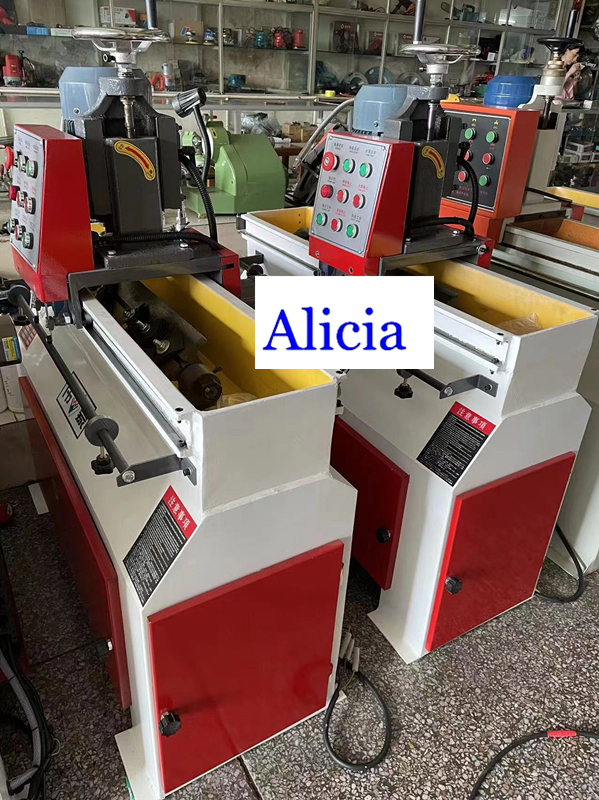
Automatic Knife Sharpener uses the electromagnetic sucker worktable, suction is homogeneous, the knife will not be distorted, grinding straightness accuracy is higher.
Industrial Automatic Electromagnetic Knife Grinding Blade Sharpening Machine is mainly used in the woodworking industry, paper making industry, printing industry, plastic industry, leather industry, metallurgy industry. It uses the electromagnetic sucker worktable, suction is homogeneous, the knife will not be distorted, grinding straightness accuracy is higher.
Technical Parameters
Max. grinding stroke:780mm
Motor power:60W
Max grinding length:700mm
Grinding whee speed:2830r/min
Grinding tilting angle:0-90
Grinding motor power:2.2kw
Machine size 750x 1200X 1400
Product Description
Maintenance Tool for Cutter-Blade Service and Operators
This machine is purpose-built for maintenance supervisors, service engineers and equipment operators who manage cutter wear in granulator and pelletiser systems. When used by a plastic pelletizer machine manufacturer or maintained by plastic pelletizer machine suppliers, it ensures the cutters of a plastic pelletizer or an industrial granulator retain sharpness and correct geometry, which is critical in high-throughput recycling or production lines. Dull or misaligned blades reduce pellet uniformity, increase fines or oversized particles, and lead to unplanned downtime—this sharpening machine fills that gap by providing tool-level precision and helping maintain line availability.
Technical Characteristics & Key Parameters
According to the product range, the machine can grind large blades of varying sizes, angles and materials such as those used in plastic crusher/granulator cutters. It features an electromagnetic suction work-table that secures the blade without distortion, supporting precision grinding. Typical models support blade lengths up to ~700 mm, with adjustable stroke and angle (0-90°) and motor power around 2.2 kW for grinding spindle. These parameters make it appropriate for servicing blades in lines where a plastic pelletizer machine or industrial granulator is integrated, ensuring the cutter set meets the required geometry for downstream pelletising operations.
Industry Usage & Value in Application
In plastic recycling, film re-grind, pipe trimming or pelletising plants, the cutter blades in granulators or pelletisers face heavy wear. Operators of plastic pelletizer machine suppliers or manufacturers of pelletising equipment rely on consistent maintenance to ensure equipment uptime. By integrating this blade sharpening machine into their maintenance workflow, they can restore blade sharpness, extend blade life, reduce scrap and maintain uniform pellet output from the plastic pelletizer or industrial granulator line. The value lies in reduced downtime, stable pellet quality, cost savings on spare blades and stronger equipment reliability for customers or internal operations.
Product Advantages
Robust Structure & Precision Holding for Reliable Service
One significant advantage is the machine’s structural design: the electromagnetic suction table provides secure clamping and prevents blade deformation during grinding, ensuring high straightness and repeatability. For a plastic pelletizer machine manufacturer or plastic pelletizer machine suppliers servicing cutter sets in an industrial granulator or pelletiser, this precision support is critical. The durable frame supports stable operation, reducing maintenance cost and improving service life of blade sets.
Modular Design & Easy Integration into Maintenance Protocols
Another advantage lies in the modular nature of the machine: components such as the suction work-table, grinding wheel assembly and angle feed mechanism are accessible for service and replacement. This is especially useful for plastic pelletizer machine suppliers who offer field service or for manufacturers preparing blade sets for their plastic pelletizer machine lines. The modularity reduces downtime during maintenance and allows adaptation to blade size variants or cutter types.
Operational Efficiency Gains & Cost-Effective Blade Lifecycle Management
The third advantage emphasizes operational value: by restoring blade geometry accurately, the machine helps the plastic pelletizer or industrial granulator lines operate with sharper cutters, which leads to more consistent pellet size, fewer fines, less energy consumption and higher throughput. This results in extended blade life, fewer replacements, lower spare-parts costs and higher customer satisfaction—benefits which plastic pelletizer machine manufacturers and suppliers can leverage when promoting their equipment service ecosystems.
Use Scenarios
Recycling Plant Maintenance Supervisor
A maintenance supervisor at a large film-waste recycling facility oversees a production line including a plastic pelletizer machine followed by an industrial granulator. The supervisor schedules periodic sharpening of the granulator cutter blades using this sharpening machine: securing the blade on the suction table, setting the angle, selecting stroke length and grinding to restore edge geometry. By coordinating with the facility’s maintenance team and the equipment vendor (one of the plastic pelletizer machine suppliers), they ensure the pelletiser output remains stable, downtime is minimised and scrap is reduced.
Field Service Engineer for Equipment Supplier
An engineer working for a firm that acts as a plastic pelletizer machine supplier visits a customer’s site for preventive maintenance. He brings the blade-sharpening machine to the site and uses it to refurbish blade sets extracted from the customer’s pelletiser or granulator units. This immediate onsite service allows the supplier to deliver heightened value—quick turnaround, improved blade condition and enhanced performance of the customer’s plastic pelletizer machine. It strengthens the supplier-customer relationship and supports service-contract value.
In-house Quality Engineer at Pelletiser Manufacturer
A quality engineer at a company that is a plastic pelletizer machine manufacturer uses the sharpening machine in their lab or pre-shipment section. Before dispatching new pelletiser units, the engineer sharpens the cutter blades to exact geometry required for uniform pellet output. This ensures that the delivered plastic pelletizer units perform to specification, reducing commissioning issues and field-service calls. The integration of blade sharpening into in-house prep supports the manufacturer’s reputation for reliability and customer satisfaction.
About Us
Alicia Import and Export Trade Co., Ltd., headquartered in Changsha City, Hunan Province, China, specialises in supplying auxiliary machinery for plastic production and recycling lines. We represent a curated network of over 100 qualified factories producing shredders, mixers, dehumidifiers, chillers, pelletisers, granulator lines and blade-sharpening equipment. Our clients include plastics processors, recycling facilities, extrusion and injection-moulding operations across North America, South America, Africa, Oceania and Europe. We provide full support from sourcing, factory audit, quality control, export documentation to global logistics.
We welcome inquiries to discuss your equipment requirements, compare models and coordinate delivery!
FAQ
1.What blade sizes and angles can the machine handle?
It supports a variety of large cutter blades of different sizes, angles and materials such as those in plastic crusher or granulator lines.
2.What is the warranty and after-sales support arrangement?
Typical support includes one-year warranty on core mechanical components, access to spare parts and remote service guidance; for specific terms contact your supplier.
3.Is the machine compatible with blades from different pelletiser or granulator brands?
Yes—provided the blade’s length, thickness and mounting conform to the machine’s clamping and grinding parameters; prior dimension checks are recommended.
4.What is the standard lead time for delivery after order confirmation?
Lead time depends on production schedule, model configuration and shipping logistics; please consult the supplier for a current timeline.
5.How is machine configuration data (e.g., grinding stroke, angle) managed and protected?
Since the machine is largely mechanical/electrical without major network connectivity, configuration is managed via local controls; recommended to follow your site’s control protocols and document maintenance cycles.