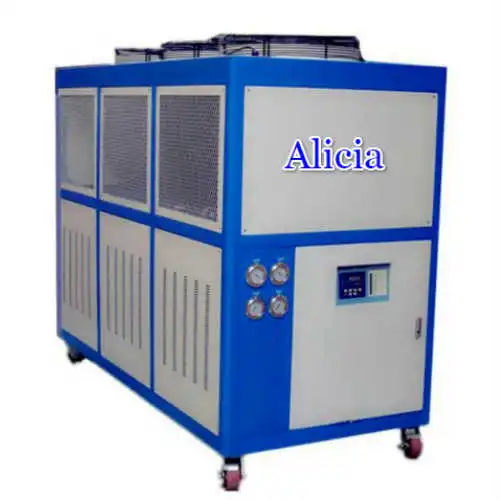
Wine cooling chiller systems work by regulating temperature, humidity and air circulation to preserve wine quality. Here’s the core working principle and process:
1. Core Principle
They rely on vapor compression refrigeration (most common) or indirect cooling (e.g., glycol systems) to lower and stabilize temperature. The goal is to keep wine at 45–65°F (7–18°C) — the optimal range for storage or serving — while maintaining 60–75% humidity to prevent cork drying.
2. Key Working Steps
Heat Absorption: The system’s evaporator (inside the wine space) uses a refrigerant (or glycol solution) to absorb heat from the air. This cools the surrounding environment.
Heat Compression: The refrigerant/glycol is pumped to a compressor (often outside the storage area), which compresses the fluid to raise its temperature and pressure.
Heat Discharge: The hot, compressed fluid flows to a condenser (external unit or connected to a water source). It releases heat to the outside air or water, cooling back to a liquid state.
Circulation & Regulation: The cooled fluid returns to the evaporator to repeat the cycle. Built-in thermostats and humidistats monitor conditions, adjusting the cycle frequency to maintain set parameters.
Air Circulation: Fans distribute cooled air evenly throughout the wine space, avoiding temperature stratification and ensuring all bottles are exposed to consistent conditions.
3. Specialized Systems (Glycol Models)
Glycol-based chillers circulate a food-safe glycol-water mixture through coils wrapped around wine bottles or integrated into storage racks. The mixture absorbs heat directly from the wine, enabling faster, more precise cooling — ideal for serving or large commercial cellars.
Specifications:
|
Model
|
Unit
|
AT-5AC
|
AT-6AC
|
AT-8AC
|
|
Cooling Capacity
|
|
KW
|
14.5
|
17.5
|
27
|
|
|
Kcal/h
|
12758
|
15054
|
23220
|
|
Compressor
|
Input Power
|
KW
|
3.75
|
4.5
|
6
|
|
Rated Power
|
HP
|
5
|
6
|
8
|
|
Power
|
|
3PH-380V/50HZ
|
|
Evaporator
|
Type
|
Shell and Tube
|
|
Pie Diameter
|
inch
|
1”
|
1”
|
2”
|
|
Refrigerant
|
Type
|
R22
|
|
Quantity
|
KG
|
2
|
2.5
|
4
|
|
Condenser(air chiller)
|
Type
|
Finned Copper Tube + Low Noise Outer Rotor Fan
|
|
Fan Power
|
W
|
180*2
|
180*2
|
420*2
|
|
Water Tank Capacity
|
|
Liter
|
45
|
45
|
80
|
|
Pump
|
Power
|
KW
|
0.75
|
0.75
|
1.5
|
|
HP
|
1
|
1
|
2
|
|
Distance
|
m
|
35
|
35
|
15
|
|
Flow Rate
|
L/min
|
110
|
110
|
360
|
|
Safety Protection
|
High and Low Pressure Protection, Overload Protection,Overtemperature Protection, Phase Sequence Protection,etc.
|
|
Dimensions(L*W*H)
|
|
mm
|
1280*680*1225
|
1280*680*1225
|
1550*850*1508
|
Product Details
01 Microcomputer LCD Controller
▪ Simultaneously displays the cold water outlet and the set temperature; ▪ Easy to operate with accuracy of controlling water temperature within 3℃ to 50℃.
02 Famous Band Compressors
Using famous brand Copeland compressor, with lower noise and less vibration, efficient and energy saving.
03 Shell&Tube Evaporators
Shell and tube evaporator adopts high-precision internal threaded copper tube design with larger heat exchanging area for higher efficiency and maximizing system performance.
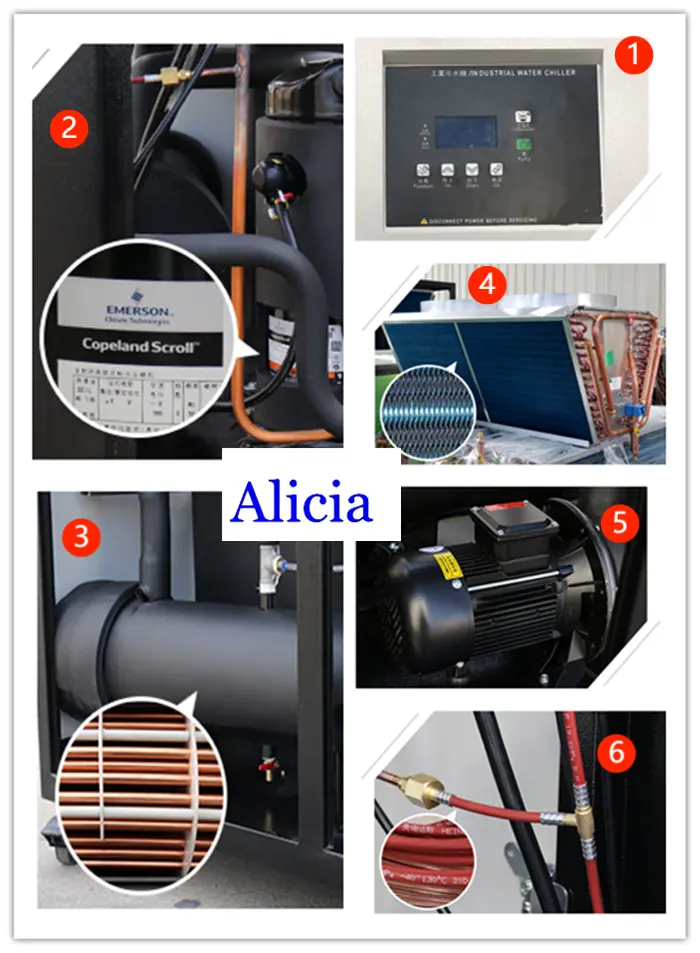
04 V Type Finned condensers
With high efficient fin type condenser and silent refrigeration fan, no need to equip cooling water, easy to install.
05 Water Pump
Advanced stainless steel Oakland water pump, with large working range, low noise, reliable performance and no leakage and maintenance-free.
06 Aviation Hose
Instead of capillary copper tube, it is resistant to high temperature and high pressure, and will not cause refrigerant leakage due to excessive pressure.
What are the advantages and disadvantages of different types of Glycol wine chillers?
Advantages: Fast cooling speed, precise temperature control (±0.5°C), suitable for both storage and serving, modular design adapts to different sizes (residential/commercial).
Disadvantages: Glycol solution needs regular inspection/replacement, higher energy consumption than standard refrigeration, requires coil installation around bottles/racks.
Glycol wine chillers are widely used in scenarios that require fast and precise temperature control for wine, covering both production and storage/serving. Here are the main applications:
1. Winemaking Production
- Fermentation Temperature Control: Circulate chilled glycol through jacketed fermentation tanks to maintain optimal yeast activity (e.g., 12–20°C for white/rosé fermentation, 20–30°C for reds), prevent overheating, and ensure consistent flavor and quality.
- Cold Soaking: Cool the must (unfermented grape juice) to 4–10°C for several days before fermentation, extracting color, flavor, and tannins more gently without spoilage.
- Cold Stabilization: Lower wine temperature to near 0°C to precipitate tartrates and proteins, improving clarity and shelf stability before bottling.
2. Wine Storage & Cellaring
- Large-Scale Commercial Cellars: Glycol systems can be configured in modular or centralized setups to cool multiple tanks or barrel rooms simultaneously, maintaining 7–15°C and 60–75% humidity for long-term storage.
- Residential Wine Rooms: Modular glycol chillers are suitable for custom-built home cellars, providing precise temperature control (±0.5°C) and quiet operation.
3. Wine Serving & Dispensing
- Restaurants/Bars: Under-counter or portable glycol chillers cool wine bottles or directly chill the wine in the dispensing lines, ensuring the right serving temperature (8–12°C for whites, 15–18°C for reds) on demand, reducing foam, and enhancing the drinking experience.
- Wine Tastings & Events: Portable glycol chillers can be quickly set up to keep wines at the proper temperature during tastings, banquets, or pop-up events.
4. Specialized & Niche Uses
- Laboratory & Sensory Analysis: Ultra-precise glycol chillers (±0.1°C) are used to prepare and hold samples at consistent temperatures for wine research, quality control, and sensory panels.
- High-End Display & Preservation: In luxury wine cabinets or display cases, glycol-based cooling offers fast response and stable temperature to protect valuable bottles while showcasing them aesthetically.
In summary, glycol wine chillers are valued for their fast cooling, precise temperature control, and flexibility in layout, making them suitable for both industrial winemaking and high-end storage/serving applications.


