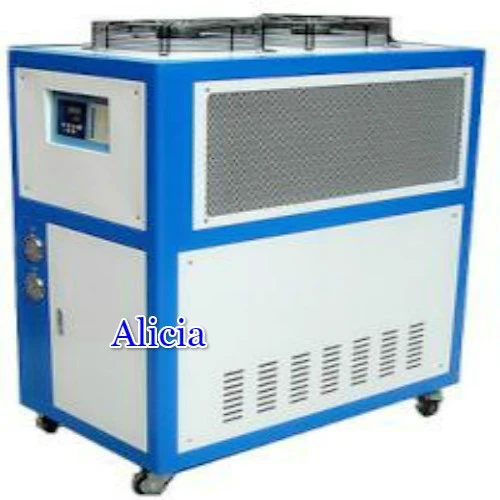
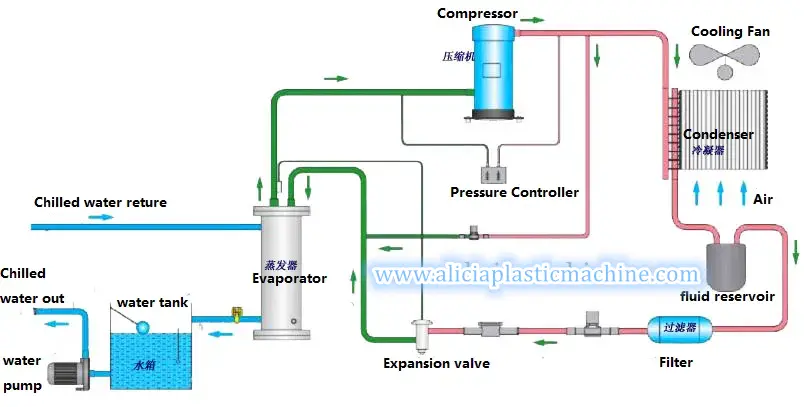
Sizing Tips for Soap Mould Freezing Chillers
Calculate heat load with a focus on "rapid cooling": Use the formula (mass of soap × specific heat × temp drop) ÷ cooling time, but shorten cooling time (e.g., 30 mins instead of 1 hour) for "freezing" needs.
Add a 20–30% safety margin (higher than standard cooling) to account for the chiller’s need to lower moulds to near-freezing temps quickly.
For air-cooled models: If installed in warm workshops (≥30°C), upsizing by 10–15% ensures the chiller doesn’t lose efficiency when dissipating heat to ambient air.
Selection Considerations of Soap Mould Freezing Chillers
Cooling Capacity: Calculate the total heat load from soap solidification (exothermic reaction), mold heat capacity, and production speed. Add a 10–20% safety margin. For example, if the calculated heat load is 10 kW, choose a chiller with 11–12 kW (≈3.1–3.4 RT) cooling capacity.
Flow Rate: Ensure the built - in pump can provide sufficient glycol solution flow to cover all molds and achieve efficient heat transfer. Narrow - channel molds may require higher flow rates.
Temperature Range: Most soap mold cooling needs 10–25°C; choose a chiller with a suitable rated range (e.g., 5–35°C) to ensure stable operation.
Ambient Conditions: In high - temperature environments (≥35°C), consider upsizing an air - cooled chiller by 5–10% to compensate for reduced heat - dissipation efficiency.
Example Suitable Model of Soap Mould Freezing Chillers
Cooling Capacity: 12 kW (3.4 RT) – fits mid-sized batches (150–200kg soap per batch, cooling from 70°C to 25°C in 30 mins)
Temp Range: 5–35°C (adjustable to 8–12°C for mould freezing)
Flow Rate: 3.2 m³/h (built-in stainless steel pump)
Tank Capacity: 100L (food-grade, corrosion-resistant)