A customer in Russia bought a stainless steel plate heat exchanger-type air-cooled chiller for grape wine cooling.Cooling grapes/wine using a stainless steel plate heat exchanger + air-cooled chiller involves establishing an indirect closed-loop system. This system utilizes a food-grade refrigerant (such as propylene glycol/water) to achieve efficient heat exchange between the wine and the refrigerant, suitable for the entire process including fermentation temperature control, cold stabilization, and rapid cooling. It is safe, hygienic, and offers high heat exchange efficiency.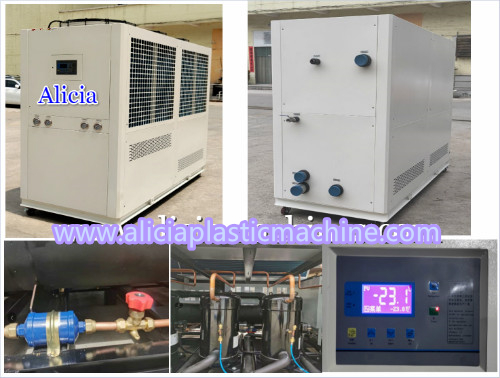
I. System Composition and Principle (Core)
1. Equipment Selection (Food-grade, Suitable for Wine)
Air-cooled chiller: Select food-grade, ethylene glycol/propylene glycol type (non-direct evaporation), cooling temperature range -10℃~20℃, suitable for fermentation (10~18℃), cold stabilization (-2~-5℃), and rapid cooling (25℃→0℃). Stainless Steel Plate Heat Exchanger: 316L stainless steel (resistant to alcoholic acids and corrosion), food-grade gasket (EPDM/FKM), counter-current heat exchange, heat exchange area calculated based on flow rate/temperature difference (e.g., approximately 105kW cooling capacity is required for 3t/h, 25℃→-5℃).
Supporting Components: Food-grade centrifugal pump (wine/refrigerant circulation), temperature control valve, pressure gauge, insulated piping, refrigerant storage tank (100~500L), cleaning CIP interface.
2. Working Principle (Indirect, no cross-contamination)
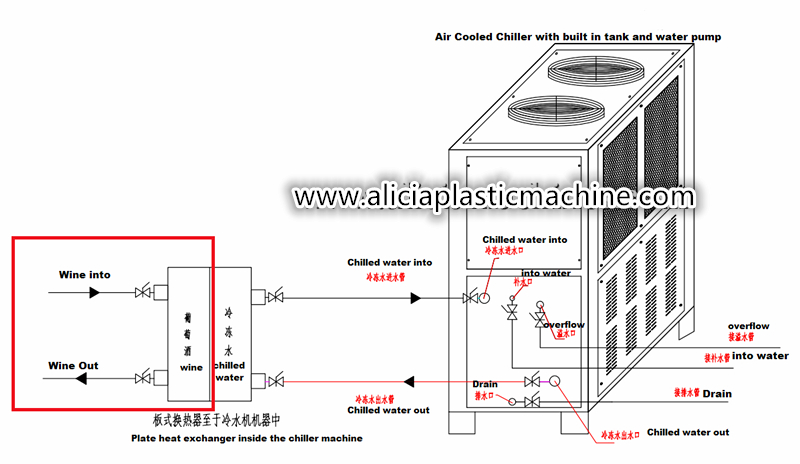
Chiller Side: Compressor → Condenser (air cooling) → Evaporator → Refrigerant (propylene glycol/water) cooled to the set temperature (e.g., -5℃) → Refrigerant pump circulation.
Plate Heat Exchanger Side: Wine (grape juice/wine) and refrigerant flow counter-currently through the heat exchange plates; the wine releases heat, the refrigerant absorbs heat → the wine cools down, the refrigerant warms up and returns to the chiller for further cooling. Closed-loop circulation: The refrigerant does not contact the wine, eliminating contamination; system insulation reduces cold loss.
II. Application Scenarios
Fermentation Temperature Control (Most Commonly Used)
Purpose: To control the fermentation temperature, preventing high temperatures from damaging flavor and producing fusel alcohols, thus improving wine quality.
Parameters:
Red Wine: 22~28℃ (fermentation), cool to 18~20℃ to terminate fermentation.
White Wine: 10~15℃ (low-temperature fermentation), cool to 5~8℃.
Process: Fermentation tank → wine pump → plate heat exchanger → reflux fermentation tank (circulating cooling), temperature controller links to chiller start/stop.


