By Alicia Import and Export Trade Co., Ltd | 01 October 2025 | 0 Comments
What industries are hopper loaders plastic suitable for?
Hopper loaders, with their core advantages of automated conveying, adaptability to a variety of material forms (granules, powders, flakes, etc.), and labor- and space-saving features, are widely used in industries requiring precise and efficient delivery of raw materials to production equipment (such as injection molding machines, extruders, and mixers). They are particularly well-suited for large-scale, continuous production. The following are their main applicable industries and specific application scenarios:
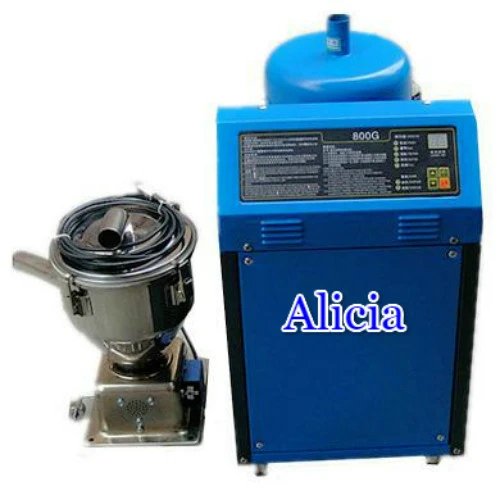
1. Plastics and Rubber Industry (Core Application Area)
The plastics/rubber industry is the largest application area for hopper loaders, as this industry relies on granular and powdered raw materials (such as PP, PE, PVC granules, and rubber powder). They require stable delivery of raw materials to the hoppers of injection molding machines, extruders, and blow molding machines, eliminating the inefficiencies and contamination risks of manual feeding. Specific Applications:
Injection Molding: Feeds plastic pellets into the injection molding machine hopper for the production of home appliance components, automotive plastic parts, and daily necessities (such as storage boxes and toys);
Extrusion Molding: Feeds raw materials into extruders for the production of plastic pipes, sheets, films, and profiles (such as PVC pipes and PPR water pipes);
Rubber Products: Feeds rubber pellets or powder into rubber vulcanizers and internal mixers for the production of seals, tire parts, and shock absorbers;
Recycling: Fitted into plastic recycling lines, it feeds crushed recycled plastic pellets into pelletizers or molding equipment, enabling raw material recycling.
2. Food Processing Industry
The food industry places extremely high demands on cleanliness and cross-contamination prevention during raw material transportation. Hopper loaders (typically constructed of 304 stainless steel and sealed piping) meet food-grade standards, preventing contamination from human contact. They are also suitable for the automated conveying of powdered/granular food ingredients.
Specific Applications:
Specific Applications:
Granular Raw Materials: Convey grains (rice, wheat), chopped nuts, candy granules, and frozen food granules (such as meatballs and dumplings) to mixers, packaging machines, and baking equipment.
Powdered Raw Materials: Convey flour, starch, milk powder, protein powder, and seasoning powders (such as chili powder and pepper) to dough mixers, puffers, and food forming machines.
Special Requirements: Some equipment can be equipped with dust- and moisture-proof designs to accommodate moisture-sensitive raw materials (such as milk powder) and prevent clumping and clogging.
3. Pharmaceutical and Health Products Industry
The pharmaceutical industry has stringent requirements for precision, sterility, and traceability in raw material conveying. Food-grade/pharmaceutical-grade hopper loaders (compliant with GMP standards) ensure sealed, impurity-free conveying of pharmaceutical raw materials, eliminating dust contamination and dosage errors associated with manual dosing.
Specific Applications:
Specific Applications:
Solid Pharmaceuticals: Convey pharmaceutical granules (such as capsule filling granules) and powders (such as traditional Chinese medicine powder and Western medicine raw powder) to tablet presses, capsule filling machines, and coating pans;
Health Products: Convey probiotic powder, vitamin granules, protein powder, etc. to mixers or packaging equipment;
Key Compatibility: Parts of the equipment that come into contact with the raw materials must be free of dead corners and easy to clean. Some parts can be equipped with sterilization functions to meet the aseptic requirements of pharmaceutical production.
4. Chemical and Building Materials Industries
The chemical and building materials industries often involve powdered and granular raw materials (such as resins, pigments, cement, and paint powders). Some of these raw materials are corrosive or dust-prone. The sealed conveying design of the hopper loader reduces dust dispersion, protects operator health, and improves conveying efficiency.
Specific Applications:
Specific Applications:
Chemical Raw Materials: Convey resin powder, pigment powder, and additive granules to reactors and mixers for the production of coatings, adhesives, and plastic additives;
Building Materials Production: Convey cement powder, gypsum powder, and quartz sand granules to mixers for the production of tiles, gypsum boards, and prefabricated components;
Special Adaptation: Some equipment can be constructed of corrosion-resistant materials (such as 316 stainless steel) to accommodate highly corrosive chemical raw materials (such as acidic powders).
5. Feed and Pet Food Industry
The feed industry requires the mixing of a variety of granular/powdered raw materials (such as grain flour, fish meal, additives, and meat and bone meal) according to a formula. Hopper loaders enable automated conveying of multiple raw materials, eliminating errors caused by manual mixing and meeting the continuous feeding requirements of large-scale feed production lines.
Specific Applications:
Specific Applications:
Livestock and Poultry Feed: Conveys corn meal and soybean meal pellets to mixers and pelletizers to produce pig and chicken feed;
Pet Food: Conveys meat meal, grain pellets, and nutritional additives to extruders to produce cat and dog food (such as puffed food);
Core Advantage: Supports "one-to-many" feeding (one loader connects to multiple pelletizers), adapting to the large-scale production layout of feed plants.
6. Metallurgy and Metalworking Industry
The metallurgical industry requires conveying metal powders and small-particle auxiliary materials (such as iron powder, aluminum powder, alloy additives, and refractory granules) to furnaces, tablet presses, or molding equipment. Hopper loaders enable efficient conveying of heavy raw materials, reducing the labor intensity of manual handling and preventing wear and tear on equipment caused by metal dust.
Specific Applications:
Specific Applications:
Powder Metallurgy: Feeding metal powders (such as iron and copper powders) to tablet presses for the production of mechanical parts (such as gears and bearing sleeves);
Metal Casting: Feeding alloy granules and refractory powders to furnaces or sand molds to improve the ratio accuracy of casting raw materials;
Suitable Features: Some equipment features increased motor power and hopper load capacity, making them suitable for denser metal raw materials.
Summary: Common Characteristics of Core Applicable Industries
Hopper loaders are suitable for industries with the following characteristics:
Raw materials are in easily conveyable forms such as granules, powders, and flakes;
Production requires continuous, large-scale feeding, and manual feeding is inefficient;
There are certain requirements for cleanliness, precision, and safety in raw material transportation (such as in the food and pharmaceutical industries), or there is a need to reduce dust and labor intensity (such as in the chemical and metallurgical industries).
Different industries can precisely match equipment to production scenarios by selecting materials (stainless steel vs. ordinary steel), seal design, motor power, and other configurations.
Improving Production Efficiency with a Plastic Pelletizer Machine
What auxiliary equipment used in the manufacture of XPS foam boards?
Leave a Reply
Your email address will not be published.Required fields are marked. *